Biodiversity & Regenerative Learning for Schools

Turn Phuket into a living laboratory — and student learning into visible action.

Regenera Thailand helps international schools connect curriculum, biodiversity, citizen science, local knowledge and student action — through professionally designed programmes based in Phuket.

30-minute discovery call · one-page concept after the call · no obligation.

  • Primary–Secondary
  • English–Thai
  • Curriculum-adaptable
  • Risk planning
  • Local professional partners
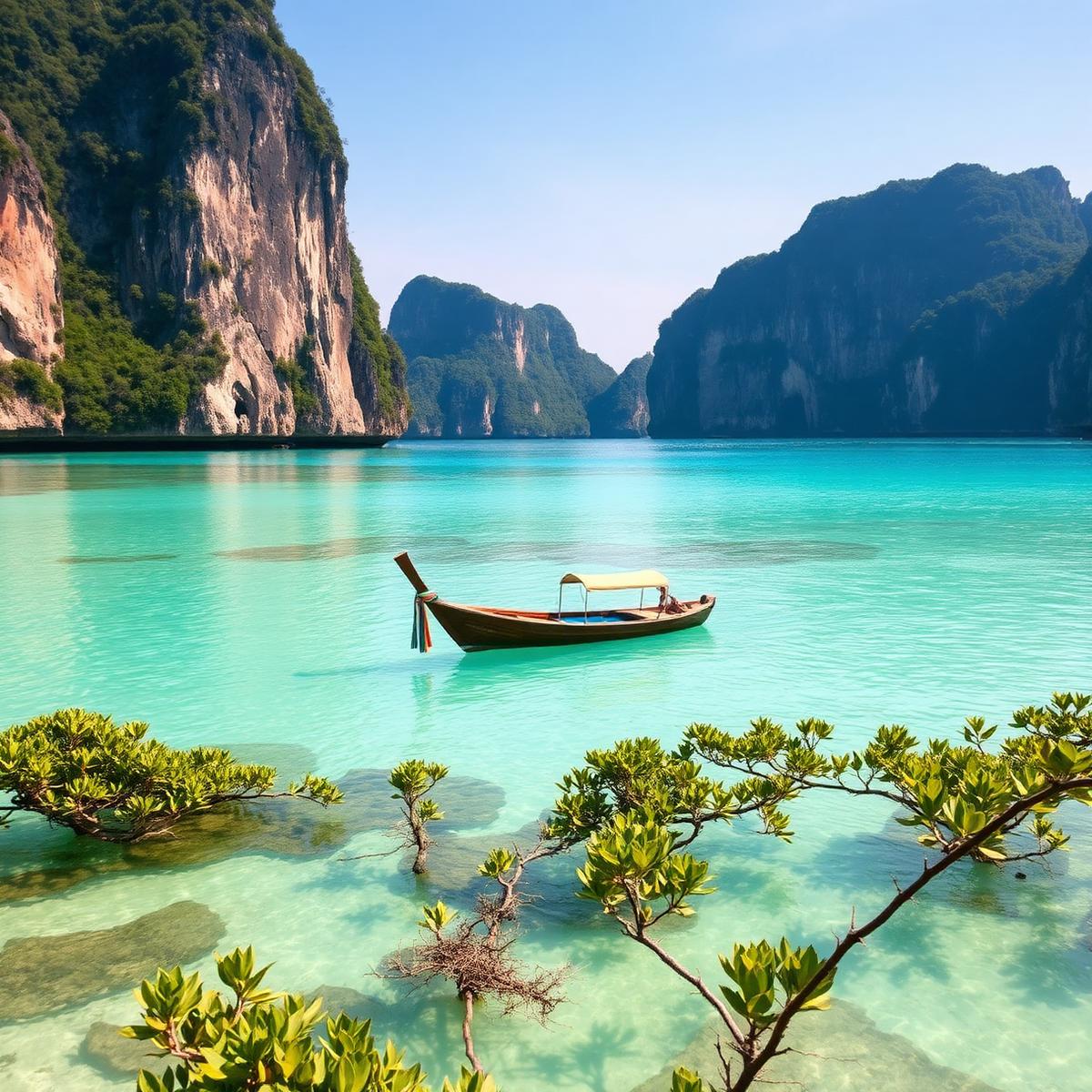
Mangrove and coastal landscape near Phuket — a working field-learning site for schools
Why now

Biodiversity is the story of this decade. Students need more than an activity.

Biodiversity is often taught as content in a textbook, or reduced to a one-off beach clean-up. Parents, boards and accreditation reviewers increasingly expect visible student inquiry, evidence and reflection — not just photographs of a day out.

A Phuket-based programme lets students see biodiversity as a living system — mangroves, reefs, food, water, culture and livelihoods — and design a small response they can actually explain.

  • AwarenessInvestigation
  • Field tripLearning pathway
  • VolunteeringInformed action
  • Activity photosEvidence & reflection
  • Sustainability claimsVisible local outcomes
Flagship offer

The School Biodiversity Learning Pathway.

Our recommended structure. Five stages that turn a single learning goal into a coherent, evidence-based experience. Delivered as a one-day introduction, a 6–8 week pathway, or an annual partnership.

  1. 1

    Discover

    Baseline and a local question — co-written with your teachers around one Phuket biodiversity theme.

  2. 2

    Investigate

    Field observation and simple citizen science with a Phuket-based practitioner.

  3. 3

    Design

    Students shape a challenge and a response connected to what they observed.

  4. 4

    Act

    A small intervention, communication piece or community exchange — proportional and consented.

  5. 5

    Reflect & Report

    Structured reflection, a student portfolio or presentation, and a concise school summary.

  • · Learning brief co-written with teachers
  • · Field evidence and student notes
  • · Student outputs and presentation
  • · Structured reflection materials
  • · Concise school summary
  • · Optional annual pathway
Design a School Programme
Three ways to engage

Choose the depth that fits your school year.

Start hereHalf or full day

Field Lab

Best for
A year group or subject department wanting one high-quality field-learning day to open a topic.
What students do
Guided field inquiry with a Phuket-based practitioner: mangrove, coast, market or heritage site.
What the school receives
Learning brief · site-specific risk plan · facilitation · post-visit reflection prompts · short summary.
Planning lead time
4–6 weeks
Investment
Proposal based on age, group size, site and scope.
Best for a term6–8 weeks

Biodiversity Challenge

Best for
A cohort or interdisciplinary group taking on one Phuket biodiversity question across a term.
What students do
Full Discover → Investigate → Design → Act → Reflect pathway, with partner introductions and weekly plan.
What the school receives
Co-developed brief · weekly plan · partner sessions · student outputs · showcase support · school summary.
Planning lead time
One term ahead
Investment
Proposal based on age, group size, site and scope.
Best long-term valueTerm or academic year

Annual Learning Partnership

Best for
Schools embedding biodiversity and regenerative learning across year groups and the school calendar.
What students do
Sequenced field learning, staff briefings, student pathways and community exchanges through the year.
What the school receives
Annual learning plan · partner coordination · field delivery · staff sessions · concise annual summary.
Planning lead time
1–2 terms ahead
Investment
Proposal based on age, group size, site and scope.
What makes Regenera different

Biodiversity-led. Phuket-specific. Locally partnered.

Biodiversity at the core

Water, food, waste, culture, tourism and quality of life connected as one living system — not isolated activities.

Phuket-based, place-specific

Designed with local sites and knowledge holders, not imported from a generic activity catalogue.

Local knowledge as professional knowledge

Community partners briefed in advance, credited by name and fairly compensated for their time.

Evidence before, during and after

Learning brief, field observation, student outputs and structured reflection — visible learning, not just participation.

Sample experience

Mangrove & Coastal Resilience — one illustrative Field Lab.

Who it's for

Years 7–13 · adaptable for upper primary. Half or full day. Up to ~30 students per session.

What students do

  • · Guided mangrove walk with a local custodian
  • · Structured citizen-science observation
  • · Community conversation with fishers or coastal residents
  • · Reflection circle and short-form outputs

What students learn

  • · Mangroves as biodiversity and coastal-protection systems
  • · Field observation and recording practice
  • · How local livelihoods connect to ecosystems
  • · A grounded personal and school-level response

What the school receives

Pre-visit briefing note · site-specific risk plan · on-day facilitation · reflection prompts · concise post-visit summary suitable for parents and portfolios.

Safety note

Weather, tide and heat contingencies are planned in advance. Full risk plan is shared with school leadership before booking.

Illustrative example. Every real programme is customised by age, learning objectives, group size, site and logistics.

Curriculum fit

Designed to fit how international schools already work.

Science & environmental systems

Ecology, biodiversity, coastal systems, fieldwork practice.

Geography / Global Perspectives

Place, human–environment interaction, local case studies.

Interdisciplinary projects

One local question investigated across subjects and forms.

Service learning / CAS / Service as Action

Where appropriate, aligned with investigation, action and reflection expectations.

Student portfolio & communication

Field notes, outputs and presentations for parents, boards and portfolios.

Regenera Thailand is independent and is not affiliated with or endorsed by the International Baccalaureate, Cambridge Assessment International Education, WASC or CIS. Programmes can be scoped to align with common frameworks where appropriate.

Safety & professional delivery

Careful preparation, before a single student steps into the field.

Each confirmed programme includes a site-specific risk assessment, weather, tide and heat contingencies, participant information, partner and photo consent, an accessibility discussion, emergency planning and clearly defined school and Regenera roles. School staff remain responsible for pastoral supervision of their students; Regenera Thailand holds responsibility for learning design, local partner coordination and site-specific planning.

Ready when you are

Bring us one learning goal. We'll turn it into a Phuket-based programme your leadership team can review.

After a 30-minute discovery call we prepare a one-page concept, and a scoped proposal where appropriate. No obligation. We normally reply within two working days.

Or email andamansmile@gmail.com · WhatsApp +66 87 898 1346.

Frequently asked

Answers for Heads, curriculum leaders and CAS coordinators.

  • Upper primary through to end of secondary. Field inquiry, safety planning and reflection depth are adjusted for the age group. Younger students focus on sensory observation and simple citizen science; older students go deeper into investigation, design and community exchange.