Bring curriculum to life
Turn a classroom question into field inquiry, observation and discussion.
For schools travelling to Thailand
Place-based learning, biodiversity, culture and community — designed around what students should learn, not just where they should visit.
Not a sightseeing itinerary with an educational label.
We start with learning goals, student age, curriculum context, risk requirements and the place itself. Then we design a route that teachers can teach through and school leaders can approve with clarity.
Turn a classroom question into field inquiry, observation and discussion.
Give students choices, a real question and time to explain what changed in their thinking.
Examine biodiversity, climate and daily decisions as connected systems, not a slogan.
Agree the purpose with local partners, then reflect on whose priorities the activity serves.
Make space for leadership, resilience, independence and collaboration without promising a transformation.
Make planning roles, supplier responsibilities and risk information visible before approval.
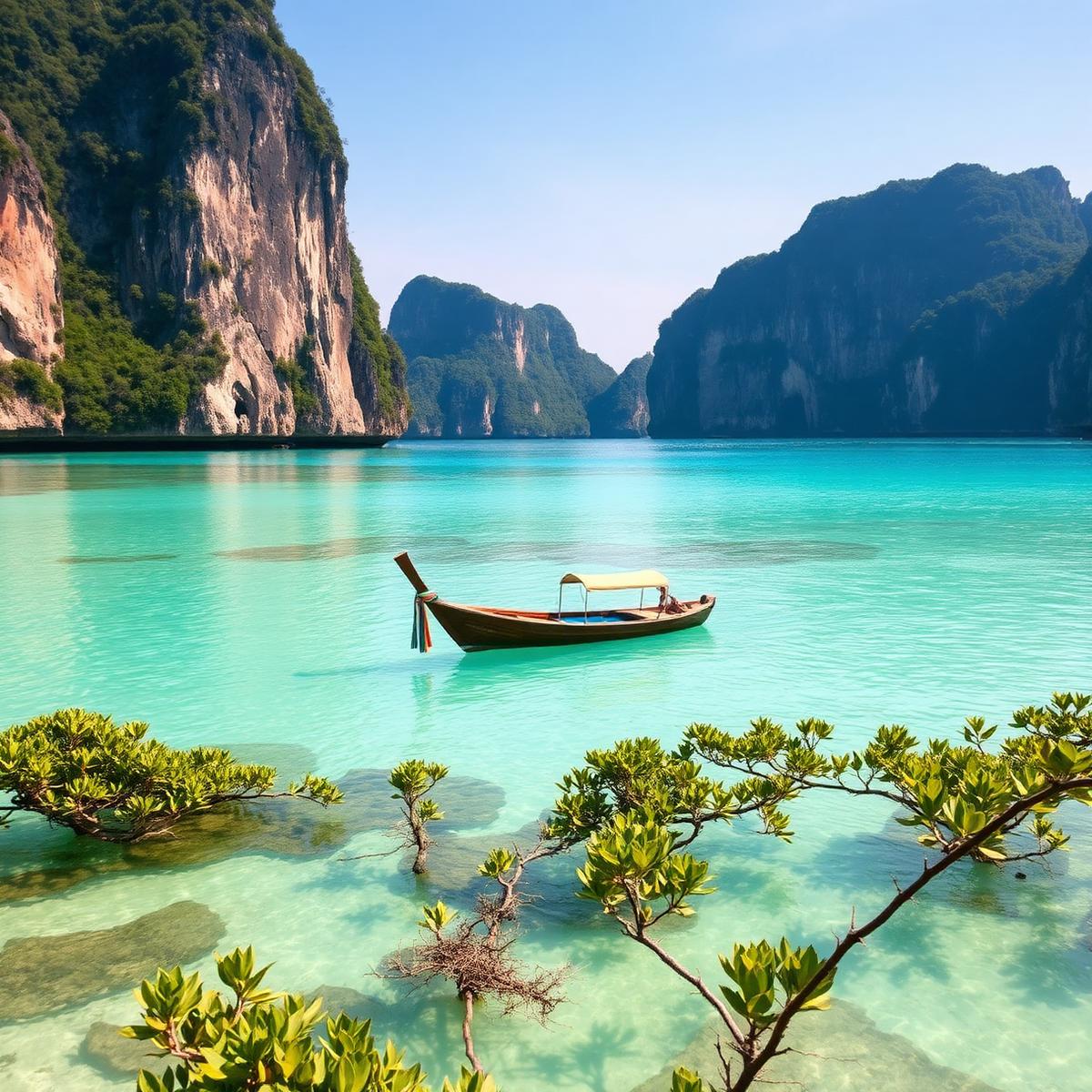
Thailand is not a backdrop. Coastlines, mangroves, tourism systems, local livelihoods, culture, food, water and waste can become connected questions about how people and places adapt. Local knowledge holders participate as credited, consented and fairly compensated professional partners, never as attractions. Our strongest field grounding is Phuket, Phang Nga and the Andaman; Thailand-wide routes are scoped with qualified local and regulated delivery partners, not assumed to be ready-made.
Observe a coastal system, ask what pressures interact, and reflect on the limits of a short visit.
Practise age-appropriate observation and recording; discuss what field notes can and cannot establish. Specialist validation is separately scoped.
Explore how work and place connect through consented exchanges; reflect on value, reciprocity and who benefits.
Trace a practical flow, identify trade-offs and propose a question worth investigating further.
Map visitors, residents, nature and businesses; ask what a more useful measure of contribution might be.
Learn from professional local knowledge holders with consent and credit, then reflect on representation and perspective.
A school brief can connect to IB CAS, MYP Service as Action, ESS, Geography or Biology field learning, Global Perspectives, interdisciplinary learning weeks, leadership or residential programmes. Teachers define the learning outcomes; we design the field and reflection around them.
Curriculum references describe possible alignment only. Regenera Thailand is independent and is not endorsed by or affiliated with IB, Cambridge, UNESCO or any other curriculum body.
Typically 3–5 days
A focused coastal or community inquiry with pre-briefing, field time and reflection.
Typically 5–8 days
A multi-theme journey where service is scoped with local partners and educational purpose comes first.
Typically 7–12 days
A longer cross-place learning journey, planned with appropriate local and regulated delivery partners.
Durations are tailored. No fixed per-student price: dates, group size, season, route, accommodation, transport, activity requirements and licensed supplier costs shape the proposal. Scope and commercial terms are confirmed in writing after your brief.
Safety and safeguarding are considered during planning, but no trip is risk-free. Schools retain their own approval, due-diligence and pastoral responsibilities; responsibilities are agreed before travel.
Year group, group size, dates, learning goals, curriculum, budget range and accessibility/safeguarding requirements.
Decide what students will investigate, practise and reflect on.
Check season, site capacity, regulated logistics and any specialist needs.
Set out itinerary, responsibilities, inclusions, exclusions, price and payment terms.
Brief teachers, facilitate where scoped, and agree reflection and follow-up outputs.
When regulated travel services are required, transport, accommodation, ticketing or other regulated components are arranged through appropriately licensed operators/suppliers within the agreed project structure.
No orphanage-style or performative volunteering; no community visit designed only for photographs; no conservation impact claims without evidence; no formal scientific or certification claims beyond qualified specialist scope; and no vague ‘eco’ label in place of a learning goal.
Phuket-born and founder-led, Regenera combines tourism field operations experience with sustainability and place-impact thinking. We start with the learning outcome, build reflection and proportionate evidence into the programme, and assemble specialists and local delivery partners when scope and funding require them. We design learning journeys, curate activities and partners, support curriculum alignment and facilitate in the field where agreed — not a blanket promise to operate every travel component ourselves.
Durations are tailored. No fixed per-student price: dates, group size, season, route, accommodation, transport, activity requirements and licensed supplier costs shape the proposal. Scope and commercial terms are confirmed in writing after your brief.
Curriculum references describe possible alignment only. Regenera Thailand is independent and is not endorsed by or affiliated with IB, Cambridge, UNESCO or any other curriculum body.